SMC-171B-A594
Scientist.com Supplier
Ubiquitin Antibody, Clone 6C11-B3: ATTO 594
Stressmarq Biosciences
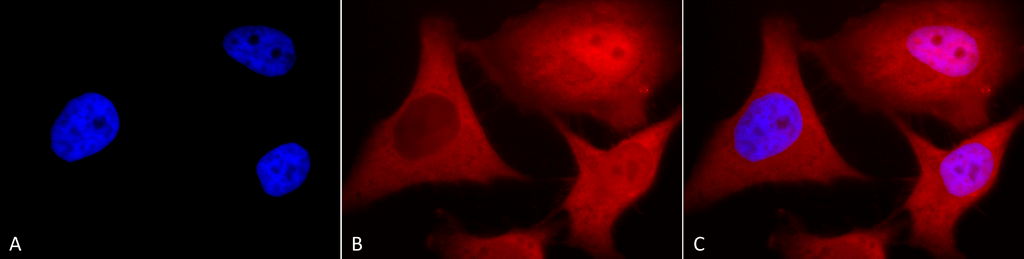
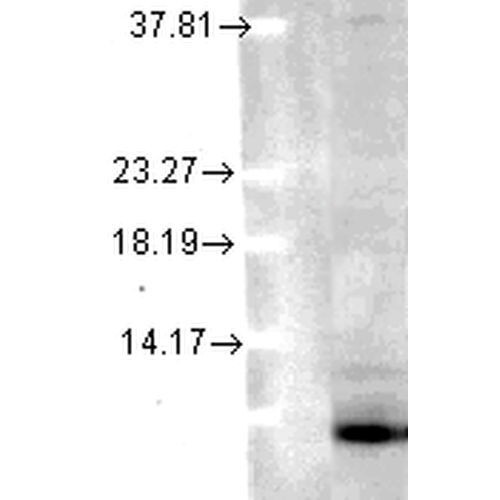
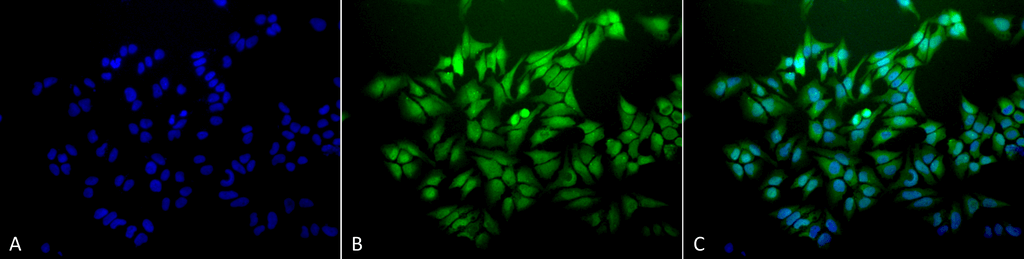
Image
Image
Image
DESCRIPTION:
Mouse Anti-Bovine Ubiquitin Monoclonal IgG2a Kappa
DETAILS
- Target: Ubiquitin
- Gene Id: 281370
- Isotype: IgG2a Kappa
- Conjugate: ATTO 594
- Immunogen: Native bovine ubiquitin, conjugated to KLH
- References: 1. Wilkinson K.D. (1995) Annu. Rev. Nutr. 15:161-189. 2. Bonifacino J.S., et al. (1998) Annu Rev Cell Dev Biol. 14: 19-57. 3. Boston Biochem: "Ubiquitin Proteasome Pathway Overview” http://www.bostonbiochem.com/upp.php 4. Yang M., et al. (1998) J Exp Med. 187: 1835-1846. 5. Chen Z.J., et al. (1996) Cell 84: 853-862.
- Swiss Prot: P0CG53
- Specificity: Detects ~10kDa.
- Applications: WB | ICC/IF | ELISA
- Clone Number: 6C11-B3
- Field Of Use: Not for use in humans. Not for use in diagnostics or therapeutics. For in vitro research use only.
- Host Species: Mouse
- Product Type: Monoclonal
- Purification: Protein G Purified
- Concentration: 1 mg/ml
- Research Areas: Cell Signaling | Post-translational Modifications | Ubiquitination | Neuroscience | Neurodegeneration | Alzheimer's Disease
- Storage Buffer: PBS pH7.4, 50% glycerol, 0.09% sodium azide *Storage buffer may change when conjugated
- Accession Number: NP_776558.1
- Alternative Names: Polyubiquitin B Antibody, RPS27A Antibody, UBA52 Antibody, UBB Antibody, UBC Antibody, ubiquitin B Antibody
- Antibody Dilution: WB (1:1000), ICC/IF (1:100); optimal dilutions for assays should be determined by the user.
- Cite This Product: StressMarq Biosciences Cat# SMC-171B-A594, RRID: AB_2698724
- Immunogen Species: Bovine
- Storage Temperature: Conjugated antibodies should be stored according to the product label
- Shipping Temperature: Blue Ice or 4ºC
- Cellular Localization: Cytoplasm | Nucleus
- Scientific Background: Ubiquitin is a small protein that occurs in all eukaryotic cells. The ubiquitin protein itself consists of 76 amino acids and has a molecular mass of about 8.5kDa. Key features include its C-terminal tail and the 7 Lys residues. It is highly conserved among eukaryotic species: Human and yeast ubiquitin share 96% sequence identity (1). The main function of Ubiquitin is to clear abnormal, foreign and improperly folded proteins by targeting them for degradation by the 26S proteosome (2). Ubiquitination represents an essential cellular process affected by a multi-enzyme cascade involving classes of enzymes known as ubiquitin-activating enzymes (E1s), ubiquitin-conjugating enzymes (E2s or Ubcs) and ubiquitin-protein ligases (E3s). Ubiquitin is activated in a two-step reaction by an E1 ubiquitin-activating enzyme in a process requiring ATP as an energy source. The initial step involves production of an ubiquitin-adenylate intermediate. The second step transfers ubiquitin to the E1 active site cysteine residue, with release of AMP. This step results in a thioester linkage between the C-terminal carboxyl group of ubiquitin and the E1 cysteine sulfhydryl group. The third step is a transfer of ubiquitin from E1 to the active site cysteine of a ubiquitin-conjugating enzyme E2 via a trans(thio)esterification reaction. And the final step of the ubiquitylation cascade creates an isopeptide bond between a lysine of the target protein and the C-terminal glycine of ubiquitin. In general, this step requires the activity of one of the hundreds of E3 ubiquitin-protein ligases (often termed simply ubiquitin ligase). E3 enzymes function as the substrate recognition modules of the system and are capable of interaction with both E2 and substrate(2, 3). Ubiquitination also participates in the internalization and degradation of plasma membrane proteins such as some of the TCR subunits while still ER-membrane associated (4). Ubiquitin also plays a role in regulating signal transduction cascades through the elimination inhibitory proteins, such as IκBα and p27 (5).
- Certificate Of Analysis: 1 µg/ml of SMC-171 was sufficient for detection of ubiquitin in 10 µg of Hela Lysate by colorimetric immunoblot analysis using Goat anti-mouse IgG:HRP as the secondary antibody.
- Species Reactivity Full Name: Human | Mouse | Rat | Bovine