SPC-118D-APC
Scientist.com Supplier
SOD (Mn) Antibody: APC
Stressmarq Biosciences
Image
Image
DESCRIPTION:
Rabbit Anti-Human SOD (Mn) Polyclonal
DETAILS
- Target: SOD2
- Gene Id: 6648
- Conjugate: APC
- Immunogen: Recombinant Human Mn SOD Protein
- References: 1. Adachi T., et al. (1992). Clin. Chim. Acta. 212: 89-102. 2. Barrister J.V., et al. (1987). Crit. Rev. Biochem. 22:111-180. 3. Furukawa Y., O'Halloran T. (2006). Antioxidants & Redo Signaling. Vol 8, No 5,6. 4. Gao B., et al. (2003). Am J Physiol Lung Cell Mol Physiol 284: L917-L925. 5. Hassan H.M. (1988). Free Radical Biol. Med. 5: 377-385. 6. Kurobe N., et al. (1990) Biomedical Research. 11: 187-194 7. Wispe J.R., et al. (1989) BBA. 994: 30-36. 8. Xiao-Hong Liu., et al. (1993) Brain Research. 625: 29-37.
- Swiss Prot: P04179
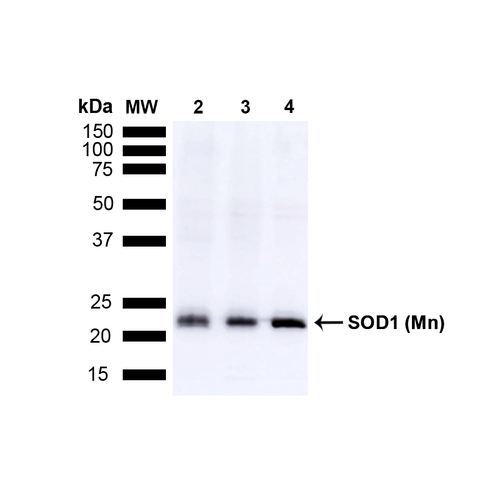
- Specificity: Detects ~25kDa.
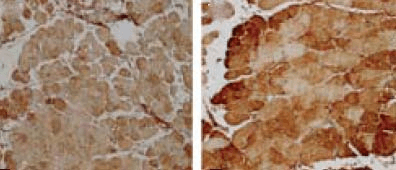
- Applications: WB | IHC | IP | ELISA
- Field Of Use: Not for use in humans. Not for use in diagnostics or therapeutics. For in vitro research use only.
- Host Species: Rabbit
- Product Type: Polyclonal
- Purification: Protein A Purified
- Concentration: 1 mg/ml
- Research Areas: Cancer | Oxidative Stress | Cell Signaling | Neuroscience | Neurodegeneration | Cardiovascular System
- Storage Buffer: PBS pH7.4, 50% glycerol, 0.09% sodium azide *Storage buffer may change when conjugated
- Accession Number: NP_000627.2
- Alternative Names: Manganese SOD Antibody, IPO B Antibody, Mn SOD Antibody, SOD2 Antibody
- Antibody Dilution: WB (1:5000), IHC (1:100); optimal dilutions for assays should be determined by the user.
- Cite This Product: StressMarq Biosciences Cat# SPC-118D-APC, RRID: AB_2703407
- Immunogen Species: Human
- Storage Temperature: Conjugated antibodies should be stored according to the product label
- Shipping Temperature: Blue Ice or 4ºC
- Cellular Localization: Mitochondrion | Mitochondrion Matrix
- Scientific Background: Superoxide dismutase (SOD) is an endogenously produced intracellular enzyme present in almost every cell in the body (3). It works by catalyzing the dismutation of the superoxide radical O2ˉ to O2 and H2O2, which are then metabolized to H2O and O2 by catalase and glutathione peroxidase (2,5). In general, SODs play a major role in antioxidant defense mechanisms (4). There are two main types of SOD in mammalian cells. One form (SOD1) contains Cu and Zn ions as a homodimer and exists in the cytoplasm. The two subunits of 16 kDa each are linked by two cysteines forming an intra-subunit disulphide bridge (3). The second form (SOD2) is a manganese containing enzyme and resides in the mitochondrial matrix. It is a homotetramer of 80 kDa. The third form (SOD3 or EC-SOD) is like SOD1 in that it contains Cu and Zn ions, however it is distinct in that it is a homotetramer, with a mass of 30 kDA and it exists only in the extra-cellular space (7). SOD3 can also be distinguished by its heparin-binding capacity (1).
- Certificate Of Analysis: 0.2 µg/ml of SPC-118 was sufficient for detection of Mn SOD in 20 µg of rat brain tissue extract by colorimetric immunoblot analysis using Goat anti-mouse IgG:AP as the secondary antibody.
- Species Reactivity Full Name: Human | Rat | Mouse | Bovine | Dog | Chicken | Gerbil | Guinea Pig (Cavia porcellus) | Pig | Hamster | Monkey | Rabbit | Sheep | African clawed frog (Xenopus laevis) | Frog | Wood Frog (Rana sylvatica)